Soulcalibur- Legends Rom
Published
- Console
- Wii
- Size
- 1.3 GB
- Format
- rvz
- Region
- USA
- Released
- November 20, 2007 on Wii
- Publishers
- Namco
- Genre
- Action/Hack and slash
- ESRB Rating
- Teen
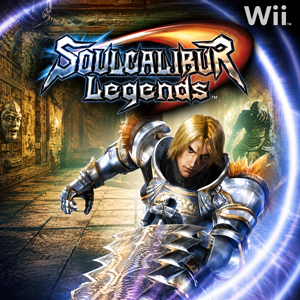
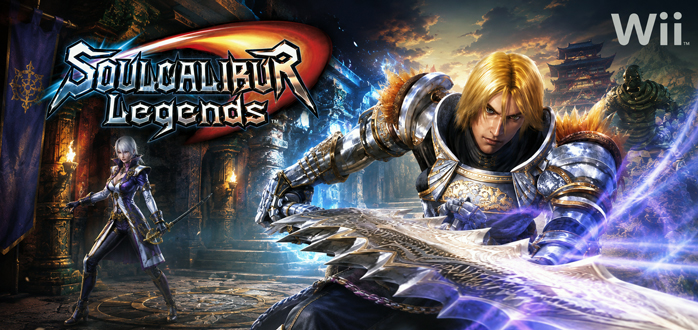
The USA Soulcalibur Legends ROM turns the series into a Wii quest game where the grade after a mission matters as much as reaching its final room. Its disc ID is RSLEAF, and the file is supplied in RVZ format for Dolphin. The emulator opens RVZ directly, so the file does not have to be converted into an ISO image.
Controls need more preparation than the file. Dolphin must see a Wii Remote with the Nunchuk extension, whether the input comes from original controllers or an emulated profile. Assigning only one generic swing leaves part of the directional attack system unused. The game is currently rated Playable in Dolphin. For a black screen at boot, open Graphics and set “Store XFB Copies to Texture Only” to Off.
A result screen builds the weapon rack
Every completed quest tallies combo count, damage output, and completion time. Those totals shape the reward, while higher ranks unlock more weapons. A quick character can chase a longer string of hits; a heavier weapon can push the damage figure instead. The route may be familiar on a second run, but a different fighter can change the result.
Quest Mode contains 40 quests across 12 environments, and many stages last roughly five to eight minutes. Forty quests do not mean forty separate maps. Vienna, the old cathedral and the Egyptian ruins return with enemies moved around, doors opened in a different order, or a new objective placed at the end. The brief running time helps, but the recycled scenery becomes obvious during a long session.
Some objectives use the surroundings more thoughtfully. When Fafnir rises beyond sword range, fixed crossbows are needed to bring the dragon back down. Elsewhere, a timed defense can require both enemy forces and their weapons to be destroyed before the clock expires. These moments are simple, but they make the stage more than a corridor leading to another crowd.
Weapon choice is where the cast differences become clearest. Astaroth Alpha’s axe commits to a different pace from Lloyd Irving’s paired swords, even though both are controlled through Wii Remote movements. Lloyd is a full member of the seven-character roster, and additional swords for him appear through the same rank-based progression used for the rest of the cast.
The main quest does not accept a second player. Split-screen missions are unlocked separately as the story advances, mixing cooperative tasks with competitive scenarios. Competitive play can focus on defeating the largest number of enemies, while Versus places the two characters against each other. Two complete Wii Remote and Nunchuk profiles are required when these modes are used through Dolphin.
The story rarely stops the stage
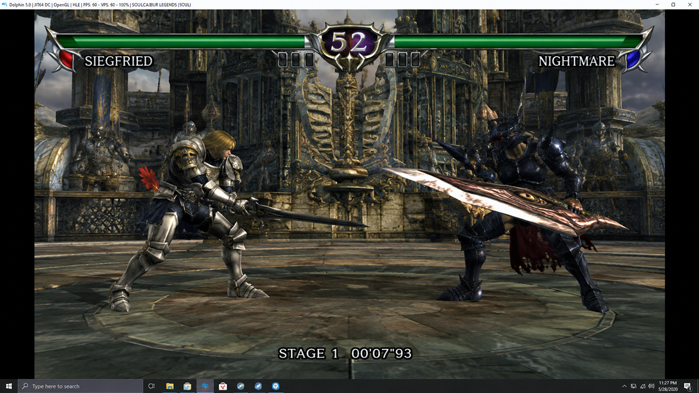
Siegfried has already claimed Soul Edge, but he has not yet become Nightmare. The events sit after Soul Edge and before Soulcalibur, with the Masked Emperor sending him to recover pieces of the cursed blade. Long cinematics are uncommon. Conversations usually appear through character portraits and text boxes, and some lines arrive while the mission continues.
Most spoken audio is limited to short lines and battle cries, leaving the orchestral score to carry much of the drama. On original hardware, some weapon-clash effects came through the Wii Remote speaker.