Soulcalibur Rom
Published
- Console
- Dreamcast
- Emulator
- Sega Dreamcast Emulators
- Size
- 712 MB
- Format
- bin/cue
- Region
- USA
- Released
- 1999 (Dreamcast)
- Publishers
- Namco
- Genre
- Action Fighting
SoulCalibur wastes little time before the first fight. The SoulCalibur ROM for Sega Dreamcast runs the 1999 console game in a Dreamcast emulator, and even a short session can hold several complete matches. Character select leads straight into the arena. Most of the story is left for the endings.
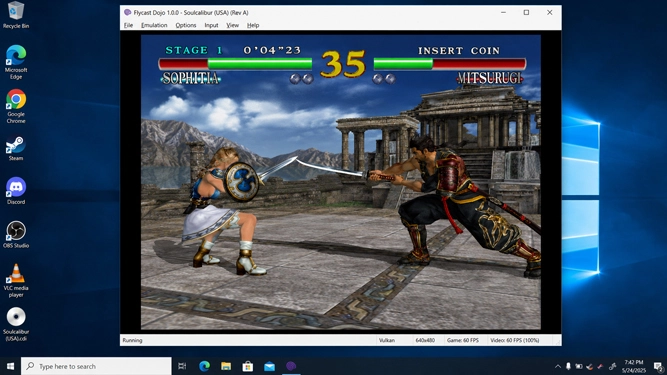
The game files are in BIN and CUE format. Keep them in the same folder and choose the CUE file when adding the game to Flycast on PC or Android. This small file describes the disc layout and points to the BIN data beside it. Selecting a BIN track on its own may not start the game correctly.
The Old Picture at a Higher Resolution
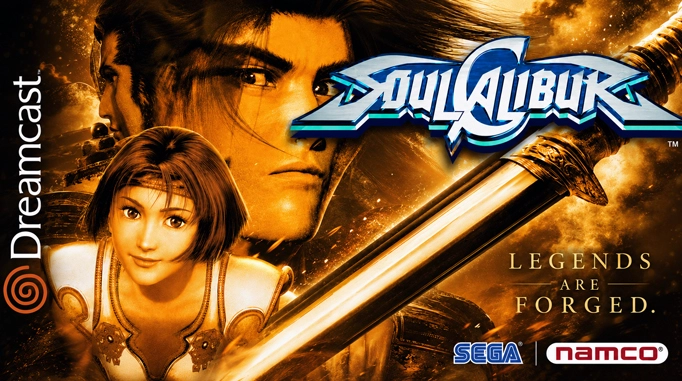
A Dreamcast emulator can draw the 3D models at a higher internal resolution. Weapon edges, character outlines and parts of the arenas become sharper, but the original texture artwork does not gain new detail. Floors and walls may therefore show their age more clearly after the resolution is raised. That comes from the original game rather than a problem with the ROM.
Movement has aged better than some of those surfaces. Attacks remain readable because each fighter has a distinct stance and a visible recovery after a missed strike. During an active match, the animation draws more attention than the low-resolution textures.
The arenas also change the mood without stopping for a story scene. One fight may take place near a shrine, while the next moves to a harbor or castle ground. The camera, color and music establish the location before the round begins.
SoulCalibur was designed for a 4:3 picture. Keeping that ratio avoids stretched characters and unusually wide stages. Internal resolution can still be increased without changing the original shape of the image.
One Character Ending at a Time
Soul Edge connects the roster, but the game does not gather every character’s story into one long campaign. Finish Arcade Mode with one fighter and only that ending is shown. Start again with somebody else and the sword is viewed from another side.
This leaves much of the cast unexplained after the first completion. Another Arcade run provides the next piece, along with a different set of attacks to learn. Survival is less forgiving because health is only partly restored between opponents. Time Attack records how long it takes to clear its fights.
Multiplayer remains local. The original Dreamcast release has no built-in online mode, so Versus still expects two controllers, just as it did in 1999.
_%5BSLES-02965%5D.webp)