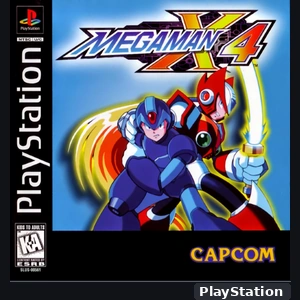
Mega Man X4 Rom
Published
- Console
- PSX (PS1)
- Size
- 392.38 MiB
- Format
- BIN/CUE
- Region
- USA
- Released
- 1997
- Publishers
- Capcom
- Developers
- Capcom
- Genre
- Action platformer
- Perspective
- Side view
- Gameplay
- Run-and-gun and saber combat
- Setting
- Futuristic Reploid conflict
- ESRB Rating
- E
Start Mega Man X4 as X or Zero and the same stage can ask for a different approach. Each hero also follows a separate path through the Repliforce conflict. The North American Mega Man X4 ROM carries both campaigns on SLUS-00561, with one game-data BIN and its CUE.
X can charge his arm cannon before an enemy comes within reach. Zero commits to a closer exchange with the Z-Saber. That difference changes where you want to land after a dash jump. X can leave space for a shot; Zero needs a position from which his blade will connect. Both characters can climb by repeatedly jumping against a wall, so the side of a shaft can become a place to plan the next move.
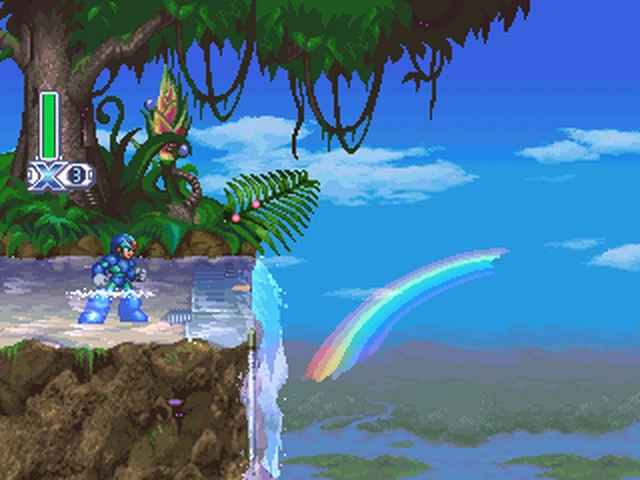
Repliforce brings a military rebellion into the Maverick Hunters’ world. X meets Double, while Zero’s story involves Iris and her brother Colonel. Animated scenes give those relationships a place between stages. Choosing the other hero lets you see another side of the conflict as well as another attack style, rather than simply replaying the same route in a different color.
What a defeated Maverick leaves behind
X takes a boss’s weapon into his arm cannon. Zero learns a technique. His new moves can change his reach or movement, while X can also search for Dr. Light’s armor capsules. Those upgrades develop the two characters in different directions: X adds equipment, and Zero expands what he can do with the saber.
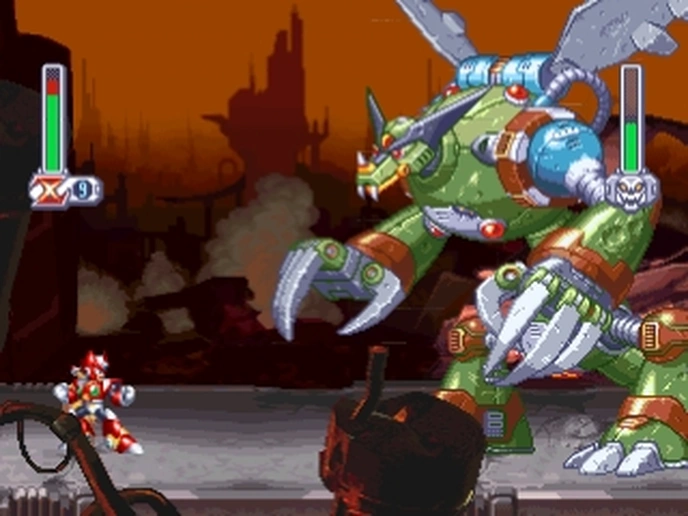
The stage-select screen opens after the introduction and lets you choose among eight Mavericks. Watch how a new weapon or movement ability changes a route you have already crossed. A ledge you noticed on the first trip may be easier to investigate with a different approach, and hidden Heart Tanks can extend the health bar for later fights.
The original PlayStation save uses one block on the memory card in slot 1. Save after a cleared stage so that a longer search for upgrades can begin from your recorded progress. To revisit a defeated boss’s area, select its darkened portrait on the stage-select screen. That makes the portrait useful even after the first victory has marked it off.