Metroid: Other M Rom

| Console | Wii |
|---|---|
| Emulator | Dolphin Emulator |
| Size | 6 GB |
| Format | .nkit.gcz |
| Region | USA |
| Released | August 31, 2010 |
| Publishers | Nintendo Co., Ltd. |
| Genre | Action |
| ESRB Rating | Teen |
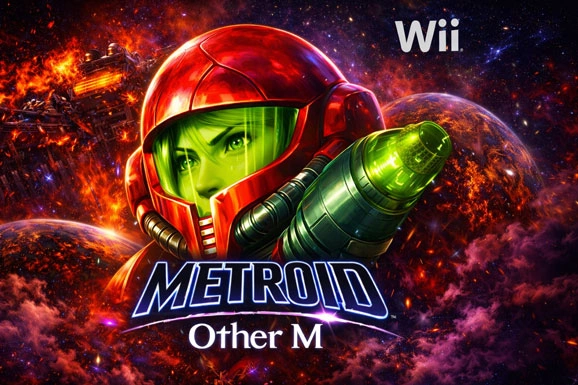
Metroid: Other M is Metroid wearing an action-game jacket. When it’s flowing, Samus feels fast and sharp. When it stalls, it’s usually because the game yanks you into first-person to “notice” something specific. Metroid: Other M Rom file is the full game with all content and items ready to use on Wii emulators. The file format is .nkit.gcz so check your emulator first to see if it supports (we test on Dolphin and it was ok).
The hands-on reality
You play with the Wiimote held horizontally, moving with the D-pad in a 3D space. It’s a strange fit. The game leans hard on auto-aim and snappy animations to smooth it out, so some people adapt quickly… and others never stop wishing for an analog stick.
Fighting: slick, a bit too forgiving
Combat is built for momentum: run in, shoot, dodge, finish. The star mechanic is Sense Move—a quick dodge triggered with a directional flick. It looks great and feels responsive, but it can also become the “easy button,” flattening fights into a safe rhythm once you get the timing.
Exploring the Bottle Ship
The ship has that classic Metroid feel—rooms that loop back, doors that tease, routes that unlock. The twist: the game is more guided and mission-like than you’d expect. Abilities are sometimes locked behind story permission, even when you clearly already have them, which can feel artificially restrictive.
First-person moments: the speed bumps
To fire missiles or inspect clues, you point at the screen and the camera snaps to first-person. Sometimes it’s immersive. Other times it turns into slow panning—looking for the one object the game wants you to acknowledge so the next scene triggers.
The vibe
A bold, divisive remix: fast third-person action with occasional first-person friction. When it hits, it’s stylish and kinetic. When it misses, it’s because the pacing gets held hostage by scanning and gating.