Street Fighter II Turbo Rom
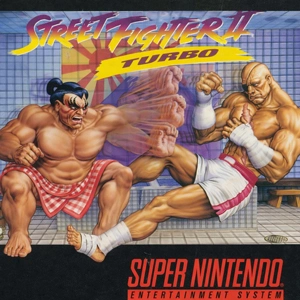
| Console | SNES |
|---|---|
| Emulator | Snes Emulators |
| Size | 6.522 MB |
| Format | .sfc |
| Region | USA,Europe,Japan |
| Released | December 1992 on Arcade |
| Publishers | Capcom |
| Genre | Fighting |
Street Fighter II Turbo on the Super Nintendo is built around speed that you can actually feel in your hands. The roster is classic, the moves are familiar, but the pace forces sharper choices. One shaky jump-in, one lazy fireball, one late anti-air, and the round can slip away fast. That pressure is the Turbo identity, and it still plays great today when the setup is responsive.
Turbo Speed and Match Rhythm
Turbo is not a small tweak. It tightens the gaps between decisions, so the neutral game becomes more active, and mistakes get punished earlier. Spacing matters more because there is less time to “fix” a bad step. Fireballs still shape the screen, but they work best when placed with intent instead of repeated patterns. At higher speed settings, discipline becomes the difference between control and chaos.
SNES Presentation That Stays Readable
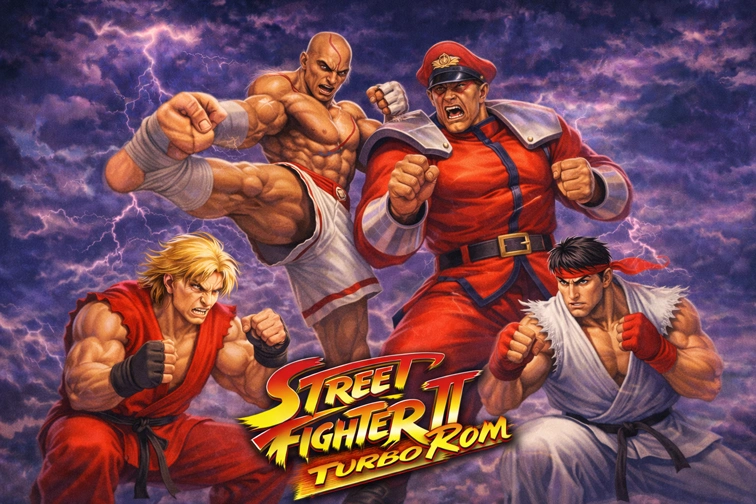
This version fits the Super Nintendo style perfectly. Sprites are clear, animations stay readable, and the action remains easy to follow even when the pace rises. The match does not rely on flashy systems to stay exciting. It stays intense because the fundamentals matter every second.
Character Feel at Turbo Pace
The game keeps each fighter’s personality, but Turbo makes habits obvious.
Ryu and Ken feel strongest when fireballs guide movement and you stay ready to answer jumps without panic.
Chun-Li shines when you keep the fight in that mid-range pocket where her speed and pokes can do the talking. At Turbo pace, even a tiny opening can turn into pressure if your spacing is sharp.
Guile still builds a wall, but Turbo speed makes that wall easier to challenge. Opponents slip in faster, so tight charge timing and patient spacing matter more than trying to force control.
Across the roster, Turbo favors clear decisions: hold your ground, take space when it is safe, and punish the obvious stuff without hesitating.
Japan, USA, and Europe Versions
Street Fighter II Turbo has releases for Japan, USA, and Europe. The core game is the same, but region builds can change small presentation details, text, and timing behavior in certain setups. For example, a European PAL version may follow 50Hz timing if your emulator respects region defaults, which can slightly alter the feel compared to an NTSC build. If you keep multiple personal backups, labeling them by region saves time later, especially when you are testing different emulator cores, video modes, or controller setups.
SFC Files and SNES Emulation Basics
Many Super Nintendo game backups are stored as .sfc files, and most SNES emulators load .sfc without extra steps. You may also see .smc used for similar SNES dumps, and many emulators treat them in a similar way. For a fast fighting game like Street Fighter II Turbo, stable full-speed performance and consistent input timing matter more than the file extension.
Playing on Android and Windows
Street Fighter II Turbo works well on both mobile and PC when the emulator is tuned for responsiveness. On Android, a good SNES emulator plus a controller can make the pace feel close to original hardware. On Windows, you usually have more room for accuracy-focused options and stable audio timing, which helps the game feel consistent in longer sessions.
Emulator Options That Fit Turbo Timing
Snes9x is often the easiest way to get into a match quickly, and it usually feels responsive across a wide range of systems. bsnes is a strong choice when accurate timing behavior is the priority. RetroArch can work well if you prefer one place to manage controller profiles, but the SNES core and latency settings are what shape the final feel.
Latency, Sync, and Audio Stability
Turbo exposes input delay instantly. A move that feels only slightly late in slower games can feel unusable here. Lower latency in small steps and stop as soon as stutter appears. Avoid heavy visual effects if they add noticeable delay. Keep audio stable, because timing and rhythm are part of how Turbo feels during real exchanges.
Six-Button Mapping That Feels Natural
Street Fighter II Turbo plays best with a comfortable six-button layout for punches and kicks. A sensible mapping reduces awkward combinations and makes specials more reliable. Reusing one saved controller profile keeps your button memory consistent, which matters a lot when you switch devices or change the Turbo speed setting.
When Turbo Feels Off: Slowdown, Input Lag, or Wrong Buttons
If the game suddenly runs in slow motion, the cause is almost always performance or video settings (sync, filters, or heavy effects), not the .sfc file. Input delay often improves with a wired controller, lower sync delay, and lighter video settings that keep the game steady. Wrong actions coming out are commonly caused by button mapping. Confirm the layout, save the profile, then test it in a versus round until it matches your hands.
Street Fighter II Turbo stays popular because it does not let sloppy play slide. With sharp spacing, steady timing, and a responsive SNES emulator on mobile or Windows, the Turbo pace turns every round into a tense, satisfying back-and-forth that still feels legendary on the SNES.